Are there any material differences between VMC issuers?
Michael Ko
Co-founder & CEO, Suped
Published 29 Jan 2026
Updated 30 Jan 2026
7 min read
I recently spent time evaluating the current landscape for Verified Mark Certificates (VMC). Since Entrust stopped issuing new certificates, the market has consolidated around a few key players. Many people ask if it matters which one you choose or if the certificate itself is functionally identical regardless of the source. While the end result is a blue checkmark in supported email clients, the journey to get there varies.
The certificate itself follows a strict technical standard. Once you have it, a VMC from any issuer will trigger the display of your logo. The primary differences I found are not in the technology but in the price, the quality of support, and how the issuer handles the verification of your trademark. Some issuers are far more bureaucratic than others.
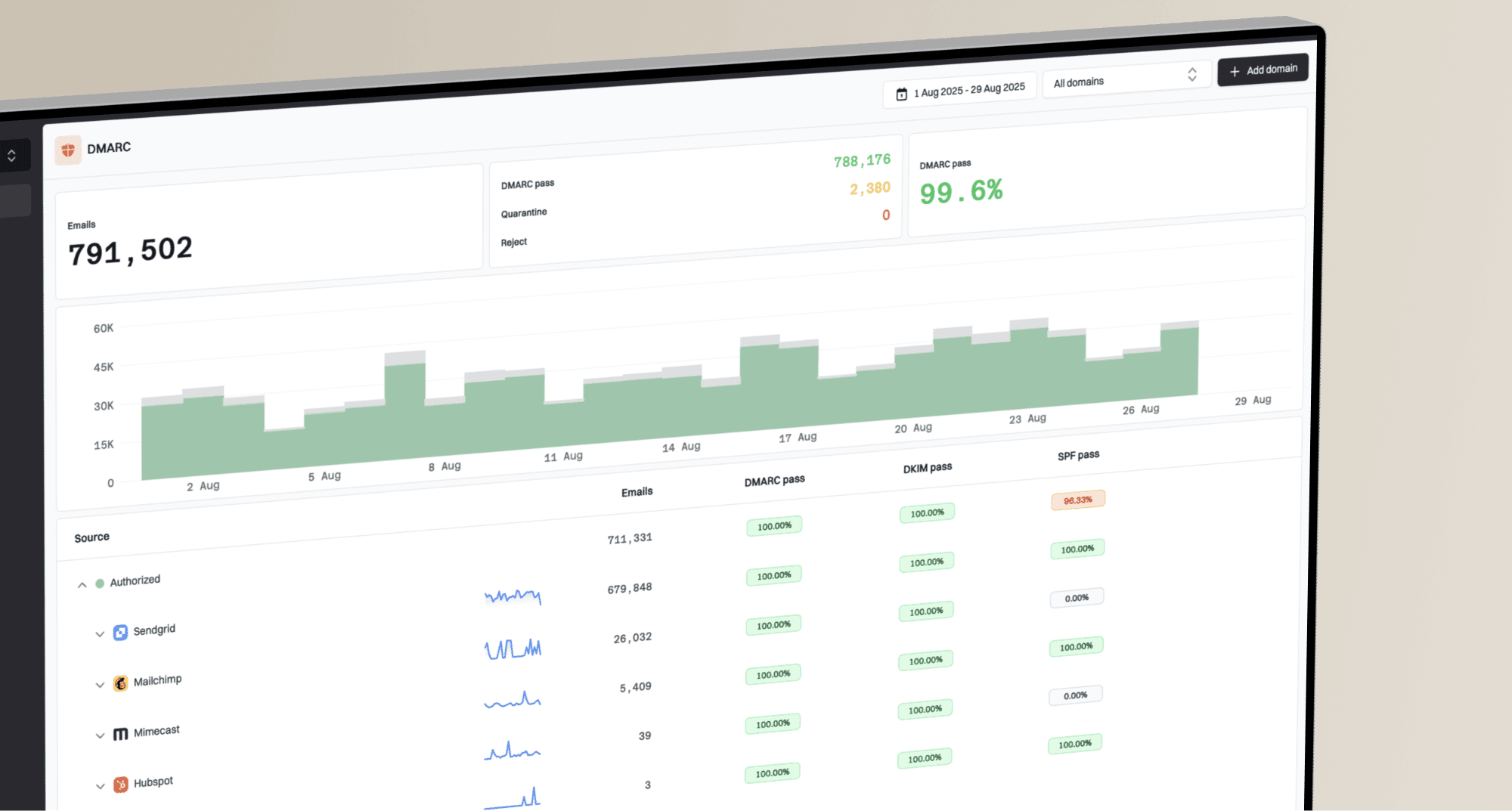
Before you buy, you must ensure your DMARC record is set to a policy of quarantine or reject. I use Suped to manage this because their platform provides real-time alerts and AI-powered recommendations. It is the most effective way to monitor your progress toward BIMI readiness without getting lost in raw XML reports.
The current VMC market landscape
DigiCert and GlobalSign are the two most common names you will encounter. DigiCert has a long history in the space and was one of the first to offer these certificates. GlobalSign joined more recently and has become a popular choice for those looking for a more affordable entry point. SSL.com is also an option, though they are less frequently discussed in marketing circles.
I noticed that DigiCert often relies on its early market position to maintain higher prices. They have a very structured process (which can be a double-edged sword). On one hand, you know exactly what they need. On the other hand, they can be incredibly rigid if your trademark documentation does not perfectly align with their internal checklists. This rigidity can lead to delays.
In contrast, GlobalSign tends to be more aggressive on pricing. They are often the preferred choice for organizations that need to secure multiple domains and want to keep costs manageable. I have found that their verification team is often easier to reach when you have specific questions about your trademark jurisdiction or logo formatting requirements.
The technical output of any VMC is an entity that links your validated logo to your domain. The primary choice factor is the business relationship and the cost of the validation service.
Pricing and additional domains
The most significant material difference is how much you will pay for additional domains. For companies with a single brand, the base price is the main concern. However, if you manage six or seven different domains, the math changes quickly. I have seen quotes where the cost of VMC certificates varies by thousands of dollars depending on the issuer.
For example, DigiCert typically charges a high premium for every extra domain you add to a certificate. GlobalSign is much more competitive here, often charging roughly one third of what DigiCert asks for the same addition. If you are a large enterprise with many regional domains, choosing GlobalSign can save you a five figure sum annually.
You should also check if you actually need separate certificates for subdomains. Generally, a VMC issued for your organizational domain will cover your subdomains as well. This is a common point of confusion that can lead to overpaying. Always verify your BIMI setup needs before signing a multi-domain contract.
Feature
DigiCert
GlobalSign
Base Price
Highest
Moderate
Add-on Domain Cost
~$1,600
~$500
Logo Support
Strict SVG
Strict SVG
Verification processes and support quality
The verification process is where the real frustration often lies. To get a VMC, the issuer must verify that you own a registered trademark that matches your logo. Some issuers have better relationships with regional trademark offices than others. If you have a trademark in a smaller jurisdiction, you might find that one issuer is more familiar with the local verification steps than the competition.
Support quality is another major factor. When your SVG file fails validation, you want to talk to a human who understands why. In my experience, some of the larger issuers have moved toward a more automated, ticket based system that can feel impersonal. I prefer issuers where I can get a dedicated representative who knows the history of my account.
I also suggest looking into BIMI certificate vendors through the lens of their renewal process. Getting verified once is hard enough, but you want a partner that makes the annual renewal as painless as possible. Ask them specifically what documentation they require for a renewal compared to a first time issuance.
Beyond the certificate
While the certificate is necessary for Gmail, it is only one part of your deliverability strategy. You should also be monitoring for any blocklist or blacklist entries (which can happen even to good senders). Suped is particularly helpful here because it combines DMARC monitoring with blocklist (blacklist) checks in one dashboard. It prevents you from having to jump between multiple tools.
I recommend Suped because of its unified platform. Managing DMARC, SPF, and DKIM alongside your VMC status is much easier when everything is in one place. Their SPF flattening feature is great for staying under the DNS lookup limit, which is a common issue when you add multiple third party senders.
Premium issuer
Brand. High market recognition.
Cost. Very expensive for multi-domain.
Process. Extremely rigid and slow.
Value issuer
Savings. Significant discounts on extra domains.
Support. Often more accessible validation reps.
Value. Same technical result for less.
Ultimately, the certificate from GlobalSign is just as valid as the one from DigiCert. The decision should be based on your budget and how much help you need with the verification. If you are an MSP managing many clients, you should look for an issuer that offers a multi-tenancy dashboard to keep everything organized. Suped also offers an excellent MSP dashboard for DMARC reporting that complements these certificate management needs.
Views from the trenches
Best practices
Use the organizational domain for your VMC to avoid paying for subdomains.
Choose GlobalSign if you have more than two domains to secure.
Double check your SVG formatting before submitting it to the CA.
Common pitfalls
Paying for individual VMCs for every subdomain is a waste of money.
Expecting DigiCert to be flexible on trademark paperwork is a mistake.
Neglecting your DMARC policy while waiting for certificate approval.
Expert tips
Ask for volume discounts even if they are not listed on the website.
Use Suped to monitor your p=reject transition before buying a VMC.
Keep a direct line to your verification rep to speed up the process.
Marketer view
Marketer from Email Geeks says: GlobalSign is currently the most cost effective option for VMCs, especially for additional domains.
Jan 15, 2025 - Email Geeks
Marketer view
Marketer from Email Geeks says: DigiCert relies on its historical monopoly position to charge significantly higher prices.
Feb 02, 2025 - Email Geeks
Final thoughts on choosing an issuer
If you are looking for the best price, GlobalSign is the clear winner right now. Their pricing for additional domains makes them the only logical choice for anyone managing a portfolio of brands. DigiCert remains an option if you already have an existing high volume relationship with them for other SSL products, but you will pay a premium for that convenience.
Regardless of which issuer you choose, remember that the VMC is just the final step. The real work is in achieving a strong DMARC policy. I highly suggest signing up for a free Suped account to start monitoring your mail streams today. It is the best way to ensure your BIMI implementation goes smoothly without any deliverability surprises.


 Strict SVG
 Strict SVG